
There are few things in life as satisfying as sitting by a cozy fire while you relax or catch up with friends and family. A good fire can help you stay warm, cook food, and enjoy an evening outdoors. But for as useful as fire can be, it’s just as dangerous when left unattended or improperly extinguished.
Before you set your next blaze, make sure you know how to put out a fire safely. Here’s everything you need to know, including how to extinguish a fire without water.
What Does a Fire Need to Burn?
Before learning how to put out a fire, you need to know what keeps it going in the first place. A fire requires three main elements (known collectively as the fire triangle) to burn:
- Fuel: Something that can burn, like wood or paper
- Heat: Enough to reach the fuel’s ignition temperature
- Oxygen: To sustain combustion
As you’ll find below, every method of extinguishing a flame targets one or more sides of the triangle; simply remove one of these elements, and the fire will die out.
How to Put Out a Fire in a Fireplace
Even as you enjoy a cozy fire indoors, you need to be cautious. A single lingering ember can cause smoke damage or even start a house fire.
Here’s how to put a fire out in a fireplace safely:
- Stop adding fuel
- Spread out the logs and embers with a poker
- Sprinkle baking soda on the embers
- Close the fireplace screen
- Never pour water into the fireplace
After the fire is completely out, scoop the ashes into a metal container with a tight lid and store the container away from the house and any flammable materials, just in case the embers inside are still hot enough to ignite a new blaze.
How to Put Out a Campfire
Campfires are fun, but they require plenty of attention to keep those around them safe. Here’s how to put out a campfire, step-by-step:
- Let the fire die down naturally until only glowing embers remain
- Slowly pour water over the embers and listen for hissing
- Stir the ashes with a stick or shovel
- Add more water
- Check for residual heat by holding your hand close to the ashes
- If it’s still warm, keep soaking and stirring
If you’re in a designated campsite or park, make sure you’re following its specific requirements for putting out campfires and disposing of your ashes.
How to Put Out a Campfire in a Fire Pit
Fire pits make things a little easier than the previous two examples, but you still need to be diligent.
Here’s how to safely put out a fire pit:
- Stop adding fuel 30 to 60 minutes before you want the fire to go out
- Use a fire poker to break up the logs and scatter any embers
- Douse the coals with water until you no longer hear hissing
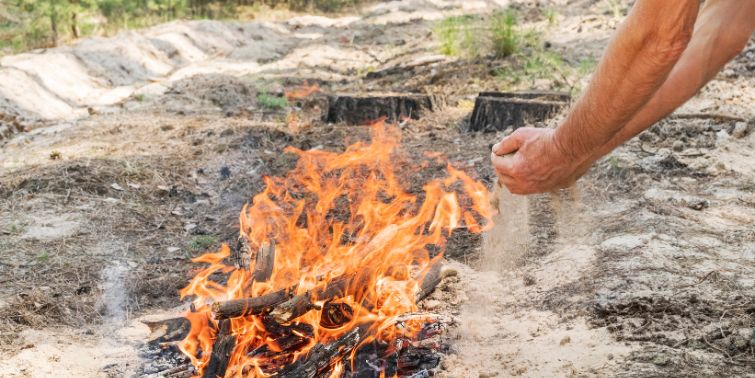
- If you don’t have any water on hand, smother the fire with dirt or sand
If your fire pit comes with a lid, carefully place it over the coals. Depriving the fire of oxygen can help prevent any hot embers from reigniting after you leave.
How to Put Out a Campfire Without Water
There may be instances in which you don’t have access to excess water in order to extinguish a fire in the “traditional” sense, but the good news is that you can still safely extinguish a campfire without even a drop of H20.
Follow these steps to do so safely:
- Let the fire die down as much as possible
- Spread the embers across the area where the fire was located
- Shovel dirt or sand over the entire area
- Mix it well
- Repeat the process until the area is cool and no smoke or glowing spots remain
Through these measures, you dismantle two sides of the fire triangle, stripping the fire of its heat and limiting its oxygen exposure.
One thing to remember, though, is that the process does take longer. You don’t want to rush things; stop adding fuel earlier in the day (or evening), as that will give you plenty of time to repeat the steps outlined above.
General Tips for Keeping Your Fires in Check
No matter what kind of fire you’re dealing with, a few universal rules apply:
Choose the Right Location
If you are lighting an indoor fire, the location has been chosen for you (your fireplace, most likely). However, if you are building a pit or preparing to light a campfire, you need to consider your surroundings. Make sure your fire is a safe distance away from any structures, tents, or trees, and look out for nearby underbrush or other items that the fire could ignite.
Adjust the amount of space you leave between your fire and surrounding objects based on the fire’s size. A small campfire needs to be around 25 to 30 feet away from any structures; larger bonfires should be even further away.
Start Slow Before Building Up Your Blaze
Don’t over fuel your campfire, pit, or fireplace. Start with a reasonable amount of firewood and add logs as necessary. Even if the fire stays under control for the entirety of the time you want with it, you don’t want to wait for a huge pile of logs to burn down before you can extinguish the flame altogether and call it a night. Try to keep the fire at a roughly consistent size the whole time and periodically add logs until you are ready to let it die out.
Never Leave a Fire Unattended
It doesn’t matter if your fire is in a fireplace, a high-quality pit, or ignited far away from any structure; someone needs to be watching the fire at all times. If you and your guests need to leave, put the fire out and ensure all embers are completely cooled. Even a few small embers can reignite a fire if they are hot enough, and you don’t want to be responsible for creating an uncontrolled blaze.
 Avoid Using Flammable Liquids to Start or Restart Fires
 Avoid Using Flammable Liquids to Start or Restart Fires
Never use flammable liquids to get your logs burning, as these can make a fire much harder to control. Additionally, using too much of one of these fluids can also cause an explosion or ignite a huge fireball that greatly harms anyone nearby. For a reliable firestarter, stick with starter logs or wood shavings; these are fuel sources that offer a slower and controllable burn.
If you are having trouble getting your fire going, it’s probably a sign that your wood is wet or of poor quality. Make sure that you are using high-quality kiln-dried firewood, and store any extra logs in a dry place so they have a consistently low moisture content. Logs that are holding excessive moisture will be difficult to light, no matter what aids you use.
Don’t Light a Fire If It’s Windy
You should never light a fire when there are strong gusts of wind. Even seemingly insignificant embers can start an uncontrolled blaze, especially during drier seasons. Consider an alternative for staying warm, such as a propane heater, and save your logs for cool nights with very little wind.
What Not to Do When Putting Out a Fire
Knowing how to put out a fire is essential for staying safe. However, learning what not to do is just as important. With that in mind, make sure that you do not do the following:
- Pour water on glass or ceramic fireplaces
- Bury hot embers under a thin layer of dirt
- Assume a fire is out just because the flames are gone
- Store ashes indoors or in plastic bins
Stick to the basics of fire safety and always ensure your pit is completely extinguished before you leave.
When to Call for Help
If a fire begins to spread and you can’t contain it, don’t try to fight it yourself. Call 911 immediately. The faster you act, the more time firefighters will have to respond and contain the blaze.
Fire Safety Starts With the Right Firewood
Putting out a fire safely and keeping it from getting out of control starts with how you build it. Using high-quality seasoned (or kiln-dried) wood ensures a cleaner burn with fewer sparks and less smoke, and that results in a blaze that’s easier to manage and put out.
Once you’ve got quality logs in hand, build a solid base. Put larger logs on the bottom and stack smaller pieces and kindling around them. Log cabin and teepee shapes are the most popular options.
Source High-Quality Logs From Lumberjacks
Now that you know how to put out a fire safely, it’s time to source some high-quality logs for your next fire, and at Lumberjacks, we’ve got you covered. We’ll provide whatever you need, from kiln-dried firewood and gourmet cooking wood. Contact us today to place your order!