
Buying firewood one bundle at a time can be frustrating. That’s why many homeowners prefer to stock up on larger quantities of firewood. While that’s a great idea, you need to know how to store fire wood correctly to protect it from pests and moisture.
The last thing you want to do is set up a huge stack of logs, only to find out that most of them won’t light the next time you want to get a roaring fire going. Luckily, firewood storage is quite simple.
All you need is a safe place to stack your logs, a firewood cover, or a shed, and something to elevate the bottom row slightly off the ground. Here’s everything you need to know about firewood storage.
Why Firewood Storage Matters
Firewood absorbs moisture fast. Wet wood burns poorly and produces more smoke. It can also cause creosote buildup inside your chimney. Because of this, it’s essential to protect firewood from the elements until you are ready to use it.
Good fire wood storage practices keep your logs dry and elevated, which limits insect activity and decay. When your logs are clean and dry, they will light faster and burn hotter.
Storing firewood correctly also improves safety. On the other hand, stacking your logs directly on the ground without a firewood rack invites pests and creates trip hazards.
Are Some Types of Firewood Easier to Store?
Certain types of firewood are absolutely easier to store than others. A few factors impact how easy it is to store any firewood. For starters, you need logs that are cut and split evenly so that they are stackable. If your logs are misshapen or composed of different lengths, creating a stable stack is going to be a headache.
Additionally, you need to decide whether you want seasoned or kiln-dried wood. Seasoning is a natural drying process that takes several months. Properly seasoned logs will burn well, but if your wood has not dried enough, the moisture content will be too high. Not only will it produce more smoke, but it may not keep as well either. Damp wood may contain pests, too.
Even if you store improperly seasoned wood the right way, it may give you trouble when it’s time to light a fire. You may have to set it out to continue the seasoning process at home, which can be frustrating.
Kiln-dried firewood, on the other hand, has been brought down to optimal moisture levels in a controlled heat environment. The kiln has precise heat and humidity settings, designed to get your logs ready to burn and kill any pests.
As long as you store kiln-dried wood properly, it will remain fire-ready for months. Think of it as giving yourself a head start next time you want to light a fire.
How Much Firewood Are You Storing?
Before you get too focused on where to store your wood, you need to decide how many logs you want to stock up on. Some homeowners prefer to keep a few bundles on hand just to get their fireplaces going. Others want a huge quantity of logs for outdoor fires, home heating, and other uses. Take a closer look at your options:
Bundles
If you only keep a few bundles on hand, storing your logs is simple. A basic firewood rack works well. You can place it outdoors or near your fireplace. However, if you are going to store the logs inside your home, make sure you use kiln-dried wood. Seasoned logs may contain pests, and you don’t want them crawling around inside your home.
If you need more than a bundle but don’t want a quarter, half, or full cord, consider a Jack Stack. It offers more firewood than a traditional bundle or bag, but is still small enough to store in an outdoor firewood rack.
Quarter Cords to Full Cords
Looking for more than a bundle? Quarter, half, and full cords provide plenty of fuel to keep the fires going all winter long. While you could use several racks to store a quarter cord, most homeowners opt for a garage, shed, or outdoor storage zone instead.
The primary purpose of a rack is to elevate the bottom row off the ground. You can achieve that with stones or supports. As long as you have a barrier between the ground and your wood, you are good to go.
How you stack your logs and what you do to protect them from the weather matters. You need to think about drainage, cover, and access. While you can’t enclose the logs on all sides, you do need to protect them from the rain and snow.
Where to Store Firewood
Here are your two main firewood storage options in terms of location:
Outdoor Firewood Storage
Outdoor firewood storage is a great option for most homeowners. It also keeps bugs out of your house.
Choose a location away from your home’s walls and foundations to reduce moisture buildup. Always keep your logs elevated and never place them directly on the ground. Popular outdoor options include:
- Outdoor firewood rack
- Firewood shed
- Storage chest with ventilation
You’ll want to opt for a storage system that works long-term based on your intended purchasing and usage habits.
Indoor Firewood Racks
You can store small quantities of firewood in your home or attached garage. If you are going to store your logs indoors, make sure you buy kiln-dried wood from a reputable supplier. Never store large quantities inside for extended periods.
Protecting Firewood From Weather
Firewood storage is all about protecting your logs from the weather and pests. Rain and snow are your biggest concerns, as they can saturate your wood. A quality firewood cover or tarp prevents moisture buildup.
Only cover the top of the stack, and leave the sides open for airflow. Don’t wrap your stack of wood completely. Doing so can trap moisture and cause mold.
Sun and wind help dry out the logs and keep moisture levels low. Choose a spot with airflow and exposure to sunlight for part of the day. A few hours of direct sunlight can speed up the seasoning process if your logs aren’t quite ready.
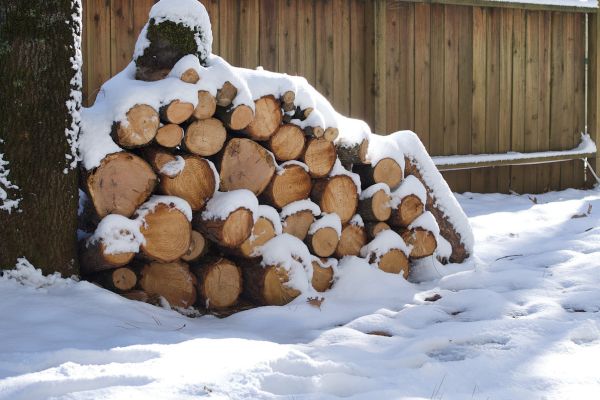 Stacking Firewood the Right Way
Did you know that there is a right and wrong way to stack firewood logs? Actually, there are many wrong ways, and only a few options for getting it right.
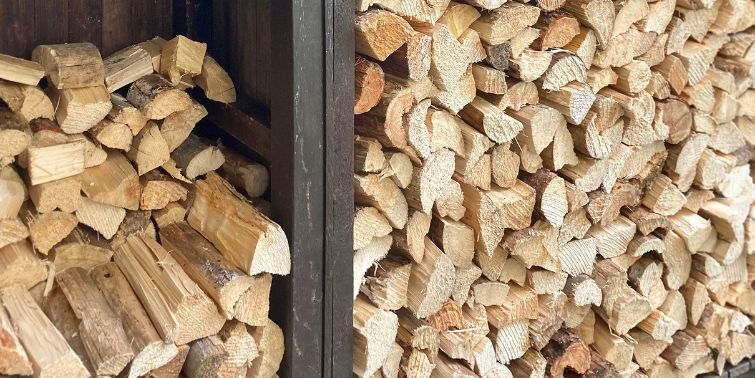
Make sure you stack your logs with the bark side down whenever possible. Keep your rows straight and balanced so that they don’t tip over. Never lean your stack against buildings. Use a rack or supports for added stability.
If you are going to be stacking large amounts, leave space between rows. You want a little airflow to keep the wood toward the middle dry.
Do You Need a Firewood Shed?
You don’t necessarily need a firewood shed. But a firewood shed is a good investment if you stock up on logs every year and want a solid place to keep them. If you do want a shed for your logs, look for options with:
- Open sides or vents
- Raised flooring
- A sloped roof
If you don’t want to purchase or build a firewood shed, there are plenty of other great options. For example, you can buy a firewood rack and cover for small to moderate quantities of wood. Storage chests are another popular option.
Keeping Pests Out
Firewood inherently attracts insects and rodents. Improperly dried logs may already have bugs crawling inside. With that in mind, make sure that you inspect your logs before bringing them inside. Shake out any wood to get rid of bugs or excess dirt.
The best way to avoid pests is to buy kiln-dried logs and follow these proper firewood storage techniques. Always store your logs away from your home or any other structures.
Common Firewood Storage Mistakes
Firewood storage is fairly simple, but even one or two small mistakes can leave your logs damp and unusable. That can be frustrating when you are excited about spending the night by the fire. Here are some mistakes to avoid:
- Storing wood directly on the ground
- Fully covering stacks without ventilation
- Placing wood against the siding
- Storing too much wood indoors
Each mistake increases moisture and exposes your logs to pests. If you are avid about having fires, invest in a good storage rack or shed. It will be well worth it.
Get Premium Firewood From Lumberjacks
How you store your firewood matters, but so does the quality of the logs you buy. Kiln-dried logs are the better option all around. They burn cleaner, store better, and come free of pests.
When you source your firewood from Lumberjacks, you’ll also benefit from our convenient delivery services. We bring high-quality firewood straight to your door. You can order mixed bundles or specific wood species, and we also offer mulch and cooking wood.
Ready to stock up? Order kiln-dried firewood from Lumberjacks today.